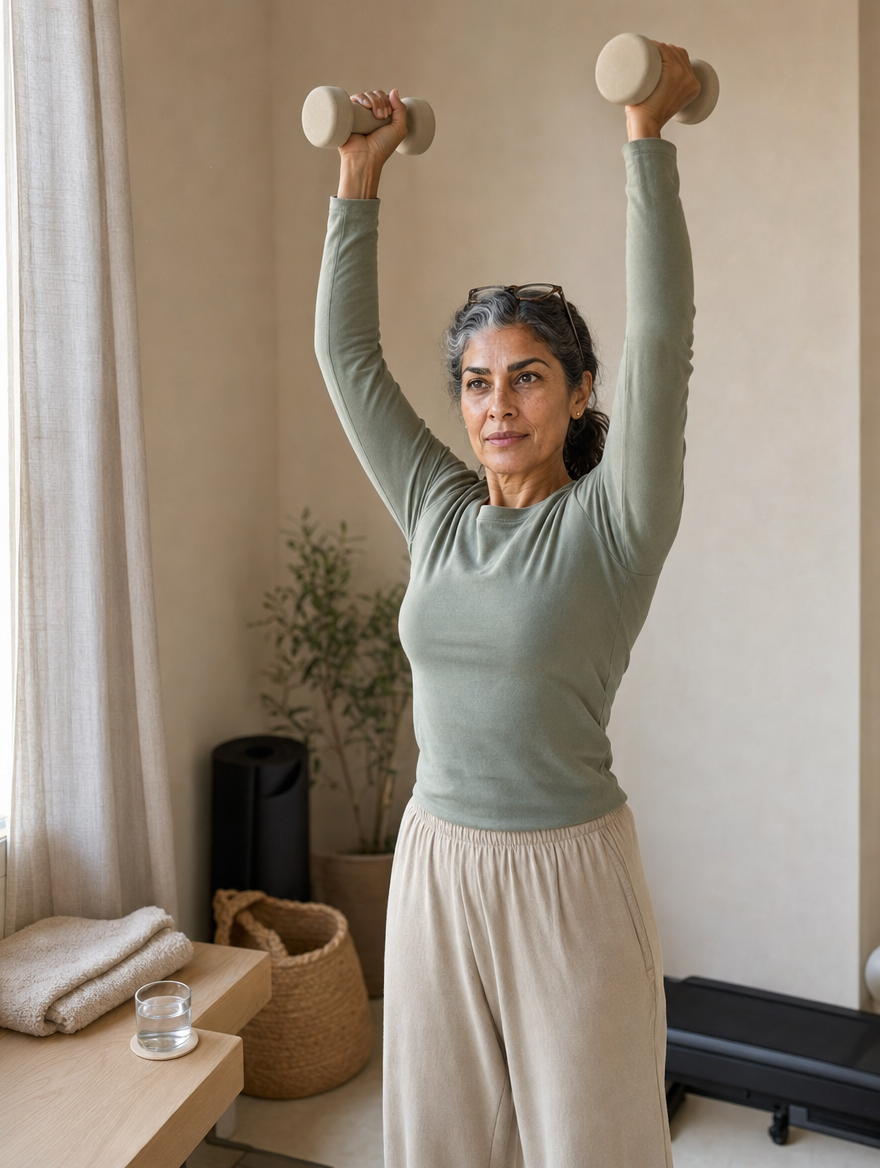
Why creatine matters more in midlife than it did in your 20s
If your impression of creatine is "it's for blokes in the gym", the science updated while you weren't looking. The strongest emerging evidence base for any supplement in the perimenopause stack — over the last 24 months — is creatine. Three converging trials make the case:
- CONCRET-MENOPA (2025) — 36 perimenopausal and menopausal women randomised to creatine HCL 1,500 mg/day, 750 mg/day, an HCL+ester combination, or placebo for 8 weeks. The 1,500 mg dose improved reaction time, frontal-brain creatine levels, and serum lipid profile, with reduced mood-swing severity1.
- Hall et al. (2025) — creatine + resistance training significantly increased lower-body strength across peri- and postmenopausal women; perimenopausal women specifically showed sleep-quality improvements2.
- Smith-Ryan et al. (2025) bridging review — creatine in women's health from menstruation through pregnancy to menopause3.
Three things change in midlife that creatine answers directly: (1) muscle loss accelerates without resistance training; (2) phosphocreatine availability in the brain may shift; (3) bone density falls — and resistance training plus creatine has the strongest evidence base for slowing it.
HCL vs monohydrate — what CONCRET-MENOPA actually showed
The CONCRET-MENOPA trial used creatine HCL at 1,500 mg/day. Most of the broader creatine evidence base — the meta-analyses of strength, performance and bone outcomes — uses monohydrate at 3–5 g/day.
HCL is more soluble in water (less GI distress for some) but is a younger evidence base for hard outcome metrics. Monohydrate is the proven workhorse — and Creapure® is the highest-purity micronised monohydrate available in Australia.
Bottom line: if cognition is your primary goal, the CONCRET-MENOPA dose pattern is well-supported. If strength, bone density, and the longest evidence base matter more, monohydrate at 5 g/day. There's no need to "choose" — the active is the same family, and many women rotate.
Dosing — when, how much, how to take it
- Monohydrate: 3–5 g/day. No loading phase needed for women in midlife.
- HCL (per CONCRET-MENOPA): 1,500 mg/day for cognition outcomes.
- Timing: consistency > timing. Take it with food or a drink, any time of day. Doesn't need to be pre- or post-workout.
- Hydration: creatine pulls water into muscle cells — drink ~500 ml extra water on training days.
The 2 picks worth your money
Out of the AU CollabCart catalogue, two creatine SKUs make the editorial cut:
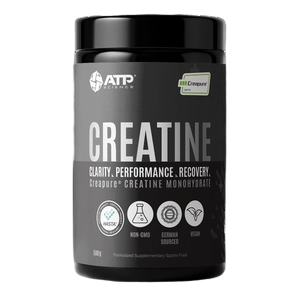
Creapure (Creatine Monohydrate)
Pharmaceutical-grade Creapure® creatine monohydrate — the same active that the CONCRET-MENOPA trial associated with brain-creatine and reaction-time gains in perimenopausal women. 5 g daily.
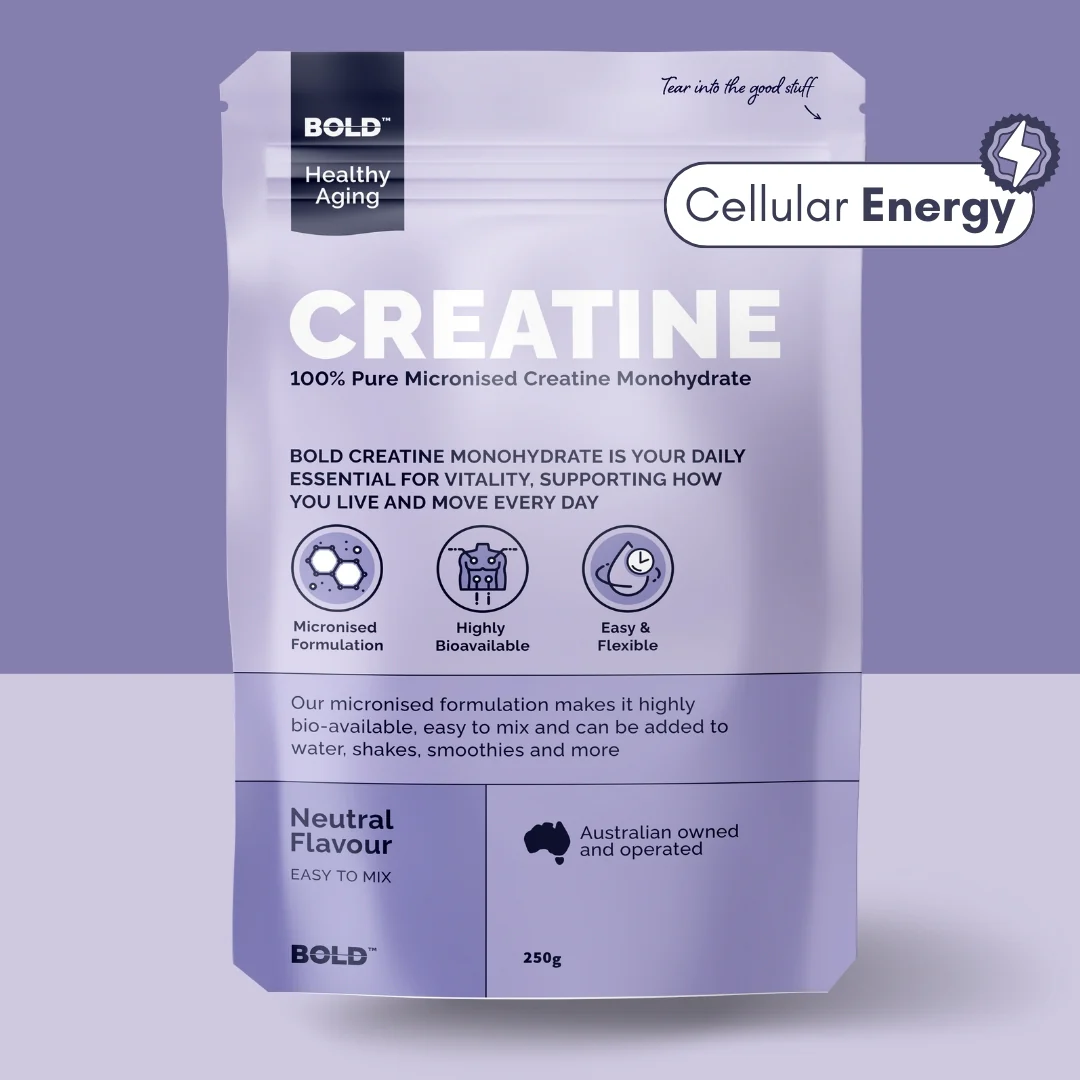
Bold Creatine
100% pure micronised creatine monohydrate. Same active as the premium picks at a budget price. 5 g daily, no loading needed.
How creatine fits the rest of your stack
Creatine pairs well with:
- Magnesium — for muscle cramps and sleep
- Protein at ~1.6 g/kg/day — to support muscle protein synthesis (the substrate creatine helps you use)
- Resistance training 2–3×/week — the practice creatine multiplies
- Sleep stack — Hall et al. specifically associated creatine + resistance training with sleep-quality improvements in perimenopausal women
Frequently asked questions
Will creatine make me bulky?
No. Creatine doesn't add fat or "build mass" on its own — it supports your muscles' ability to perform work, which (combined with resistance training) supports lean mass over time. The "mass" most women associate with creatine is water in muscle cells, which is the mechanism — not fat or bulk.
Do I need a "loading phase"?
No. Loading phases (~20 g/day for 5–7 days) reach saturation faster but provide no long-term benefit over a steady 3–5 g/day. Most women find loading uncomfortable — skip it.
Should I take creatine on rest days?
Yes — creatine is a saturation supplement. Daily consistency matters more than timing relative to training.
Is creatine safe in perimenopause?
Both CONCRET-MENOPA and Hall et al. (2025) reported their creatine interventions as well-tolerated, with no severe adverse events. As with any supplement, talk to your GP if you have kidney disease or take prescription medication.
Can I take creatine with MHT?
This is a clinician question — talk to your prescribing GP. There is no known interaction in published literature, but personalised advice belongs with your doctor.
References
- 2025 RCT (CONCRET-MENOPA). The effects of 8-week creatine HCL on cognition, clinical outcomes and brain creatine levels in perimenopausal and menopausal women. J Am Nutr Assoc. PMID 40854087.
- Hall et al., 2025. Impact of creatine on menopausal women's body composition, cognition, oestrogen, strength and sleep. PMC12291186.
- Smith-Ryan et al., 2025. Creatine in women's health: bridging the gap from menstruation through pregnancy to menopause. PMID 40371844.
- Chilibeck et al., 2023. Creatine supplementation in postmenopausal women — 2-year RCT. PMID 37144634.
Editorial note: we use "supports / may help / is associated with" language by editorial discipline. Content is for general information only and is not medical advice. Always consult your GP before starting a new supplement, particularly if you have kidney disease or take prescription medication.