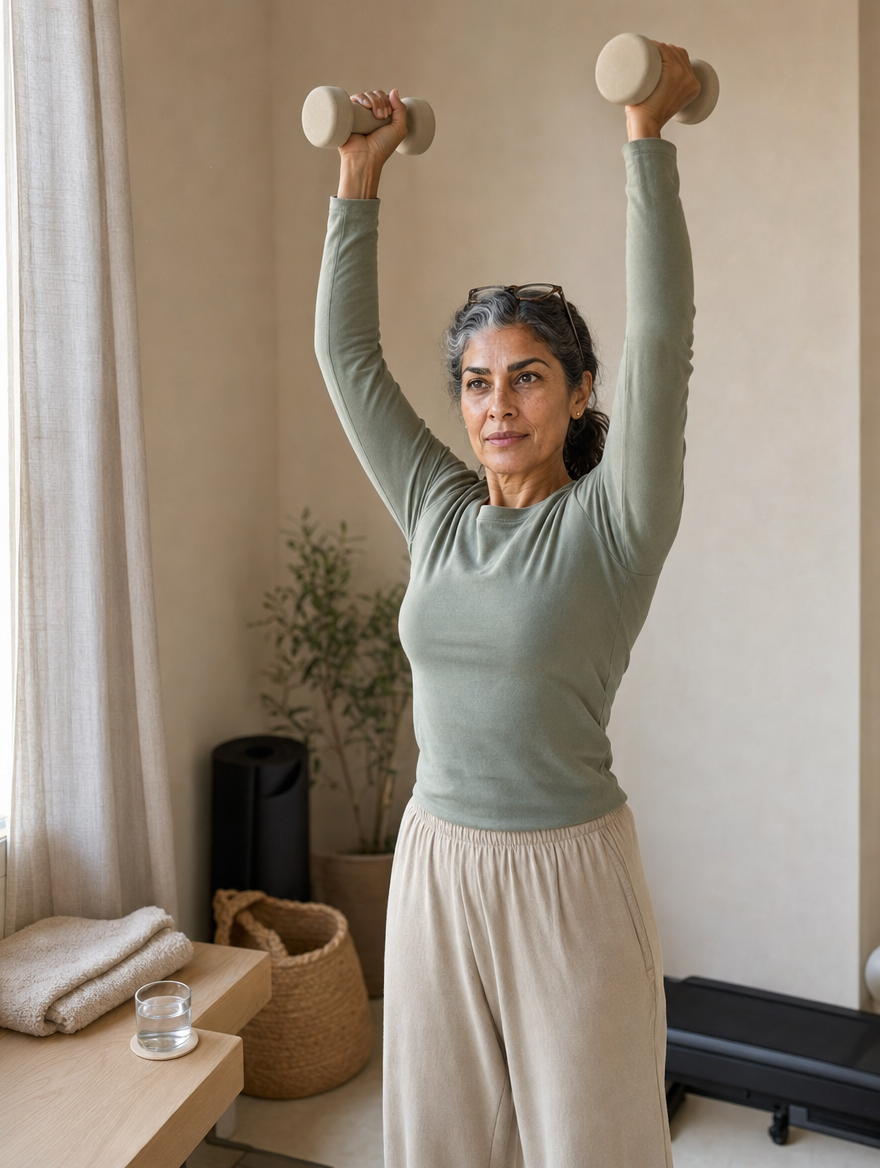
What changed (the science update)
Until ~2023, the creatine evidence base was almost entirely in young male athletes. The picture flipped fast in 2024–2025 with three converging trials:
- CONCRET-MENOPA (2025) — 36 perimenopausal and menopausal women randomised to creatine HCL 1,500 mg/day, 750 mg/day, an HCL+ester combination, or placebo for 8 weeks. Medium-dose HCL (1,500 mg/day) improved reaction time, increased frontal-brain creatine levels, modulated serum lipid profiles, and reduced mood-swing severity1. Well-tolerated.
- Hall et al. (2025) — creatine + resistance training significantly increased lower-body strength across peri- and postmenopausal women; perimenopausal women specifically showed sleep-quality improvements2.
- Smith-Ryan et al. (2025) bridging review — creatine in women's health from menstruation through pregnancy to menopause3. Synthesises the lifespan evidence and calls explicitly for more perimenopause-specific research (which is happening now).
Add to those the longer-running 2-year RCT in postmenopausal women showing favourable effects on bone outcomes when combined with resistance training4. The picture is now coherent: creatine is one of the strongest-evidenced supplements for women in midlife.
How creatine works in midlife specifically
Three midlife-specific reasons matter:
- Muscle. From your 40s, muscle protein synthesis efficiency drops without resistance training. Creatine multiplies the work you do — it doesn't replace it. With training, it supports lean mass; without training, it does very little.
- Brain. Phosphocreatine is the rapid energy buffer for high-demand tissues including the brain. CONCRET-MENOPA's increase in frontal-brain creatine is the first direct measurement of this in perimenopausal women.
- Bone. The 2-year RCT showed creatine + resistance training preserved bone mineral density at the femoral neck better than resistance training alone — relevant against the post-menopause acceleration of bone loss.
The dosing question — HCL vs monohydrate, 3 g vs 5 g vs 1.5 g
There are three live patterns:
| Form / dose | Best for | Evidence base |
|---|---|---|
| Monohydrate, 5 g/day | Strength, bone density, longest-running outcomes | Strongest, multi-decade |
| Monohydrate, 3 g/day | Maintenance / smaller-bodied women | Strong |
| HCL, 1,500 mg/day | Cognition (per CONCRET-MENOPA) | Younger, perimenopause-specific |
You don't have to choose forever. Many women in midlife rotate — monohydrate for a 12-week strength block, HCL for a cognition-focused stretch around a work crunch.
When to take it
Consistency > timing. Take it daily, with food or a drink. Doesn't need to be pre- or post-workout. Saturation supplement — daily intake matters more than precise hour-of-day.
AU-specific notes
- AUST L registration — both AU-stocked picks below are listed on the ARTG. Look for the AUST L number on the label.
- Pricing — premium creapure-grade ~$77 (~6 weeks at 5g/day); budget micronised monohydrate ~$40 (~3–4 weeks at 5g/day).
- Form availability — most AU brands offer monohydrate; HCL is less commonly stocked. CollabCart's two creatine SKUs are both monohydrate, which is fine — start there.
The 2 picks worth your money
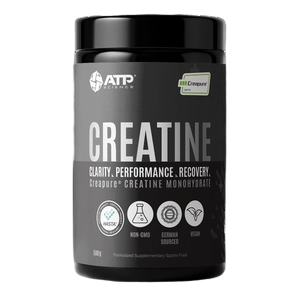
Creapure (Creatine Monohydrate)
Pharmaceutical-grade Creapure® creatine monohydrate — the same active that the CONCRET-MENOPA trial associated with brain-creatine and reaction-time gains in perimenopausal women. 5 g daily.
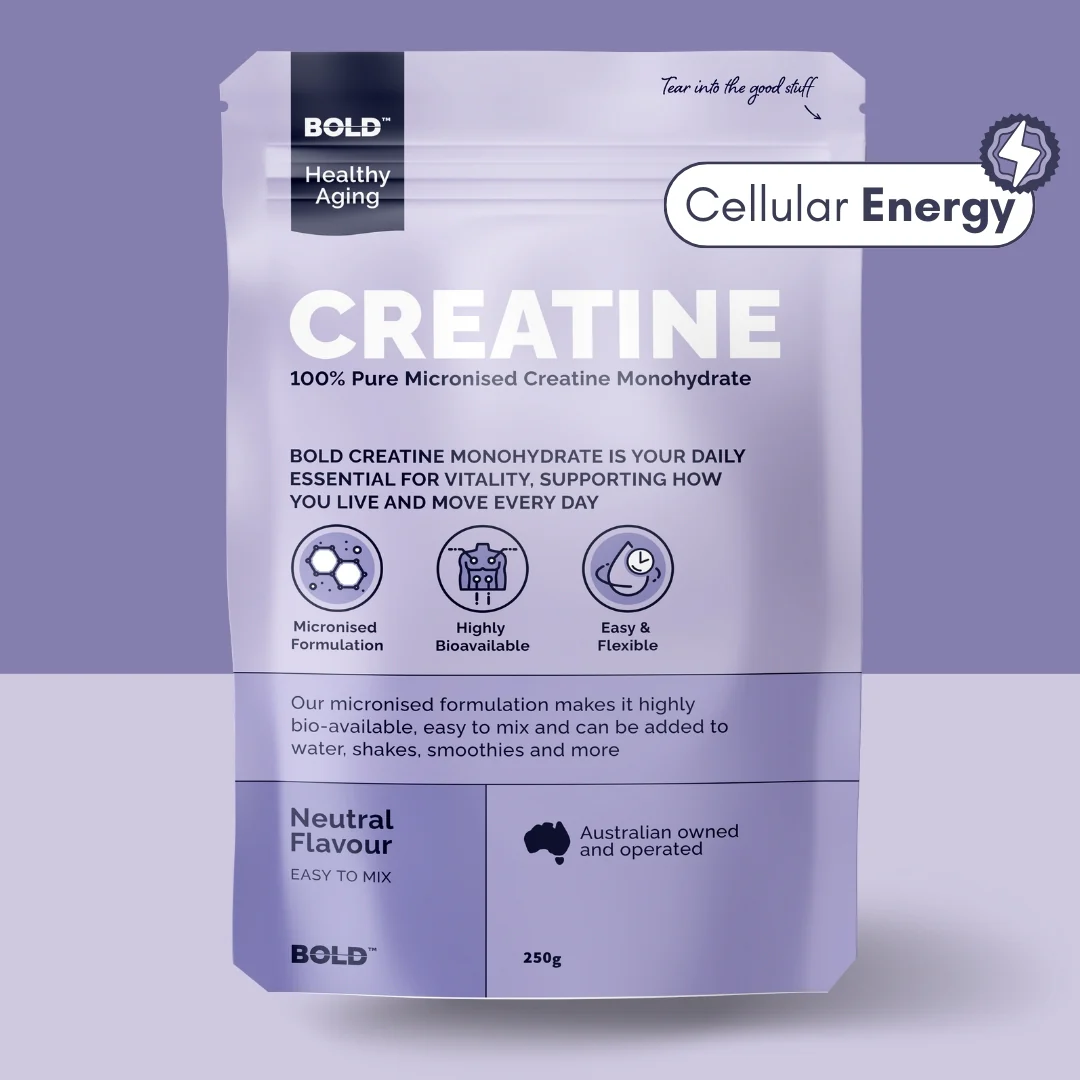
Bold Creatine
100% pure micronised creatine monohydrate. Same active as the premium picks at a budget price. 5 g daily, no loading needed.
When NOT to take creatine
- Diagnosed kidney disease — creatine is metabolised renally; talk to your GP.
- Severe dehydration risk situations — creatine pulls water into muscle cells; pair it with adequate hydration always.
- As a replacement for protein — it isn't. Adequate protein at ~1.6 g/kg/day is the substrate; creatine helps you use it.
- Pregnancy — evidence is emerging but conservative practice is to defer; talk to your obstetrician.
FAQ
Will creatine make me bulky?
No. The "weight gain" associated with creatine is intracellular water in muscle (the mechanism), not fat. Combined with training, it supports lean mass over time — but you have to do the training.
Do I need a loading phase?
No. 3–5 g/day is fine; you'll reach saturation in ~3 weeks without the GI distress that loading often produces.
Should I take creatine on rest days?
Yes. Creatine is a saturation supplement — daily consistency matters more than alignment to training days.
Is creatine safe in perimenopause?
Both CONCRET-MENOPA and Hall et al. reported creatine as well-tolerated with no severe adverse events. Talk to your GP if you have kidney disease or take prescription medication.
Can I take creatine with MHT?
This is a clinician question — there are no known interactions in published literature, but personalised advice belongs with your prescribing GP.
References
- 2025 RCT (CONCRET-MENOPA). The effects of 8-week creatine HCL on cognition, clinical outcomes and brain creatine levels in perimenopausal and menopausal women. Journal of the American Nutrition Association. PMID 40854087.
- Hall et al., 2025. Impact of creatine supplementation on menopausal women's body composition, cognition, oestrogen, strength and sleep. PMC12291186.
- Smith-Ryan et al., 2025. Creatine in women's health: bridging the gap from menstruation through pregnancy to menopause. PMID 40371844.
- Chilibeck et al., 2023. 2-year randomized controlled trial on creatine supplementation in postmenopausal women. PMID 37144634.
Editorial note: not medical advice. We use "supports / may help / is associated with" language by editorial discipline. Always consult your GP before starting a new supplement, particularly if you have kidney disease or take prescription medication. AUST L registration verified at time of writing — confirm on the label before purchase.