
If you fall asleep fine and wake at 3am wired and unable to get back, you're describing one of the most-searched perimenopause queries in Australia. It's not in your head, and it's not insomnia in the traditional sense — it's a specific pattern with specific levers.
What's actually happening
Two mechanisms run simultaneously. The first is the cortisol awakening response — cortisol naturally peaks around 3–5am to prepare you to wake. In midlife, the system can become hyper-reactive, with the cortisol peak sharper and earlier.
The second is falling progesterone. Progesterone is a GABA-A agonist — it binds to the same receptor system as benzodiazepines and contributes to the depth of slow-wave sleep. As progesterone drops in perimenopause, sleep architecture shifts: lighter sleep cycles, more arousals, and a pattern of waking at the cortisol peak when you wouldn't have before.
This is why people who "have always been good sleepers" suddenly aren't. It's not anxiety per se. The mind-racing happens because the body is in a partially-aroused cortisol state.
Why magnesium glycinate (specifically) helps
Magnesium has the strongest sleep-onset evidence among the supplements in this profile. A 2021 systematic review and meta-analysis of three RCTs in older adults found magnesium supplementation reduced sleep onset latency by ~17 minutes vs placebo1. A 2024 RCT of magnesium bisglycinate in healthy adults reporting poor sleep showed a significant reduction in Insomnia Severity Index after 4 weeks (small effect size but statistically meaningful)2.
Form matters. The differences between magnesium forms aren't marketing — they're real:
- Glycinate / bisglycinate — best tolerated, best absorbed, strongest sleep evidence. The form to choose for the 3am wake-up.
- L-threonate — small molecules that cross the blood-brain barrier; cognition-targeted. Useful in the same window for brain fog.
- Citrate — useful for constipation; mild sleep effect.
- Oxide — what's in the bargain bin at Chemist Warehouse. Poorly absorbed.
Most "magnesium" without a form on the label is oxide. If your supplement just says "magnesium 250 mg", read the back — most likely oxide.
The 4-product 3am protocol
The Switch Nutrition sleep family covers the airway + cortisol + magnesium dimensions of the 3am pattern. The full set is below — start with Sleep+ Capsules and Mag3, add the airway products if your snore wakes you (or your partner).
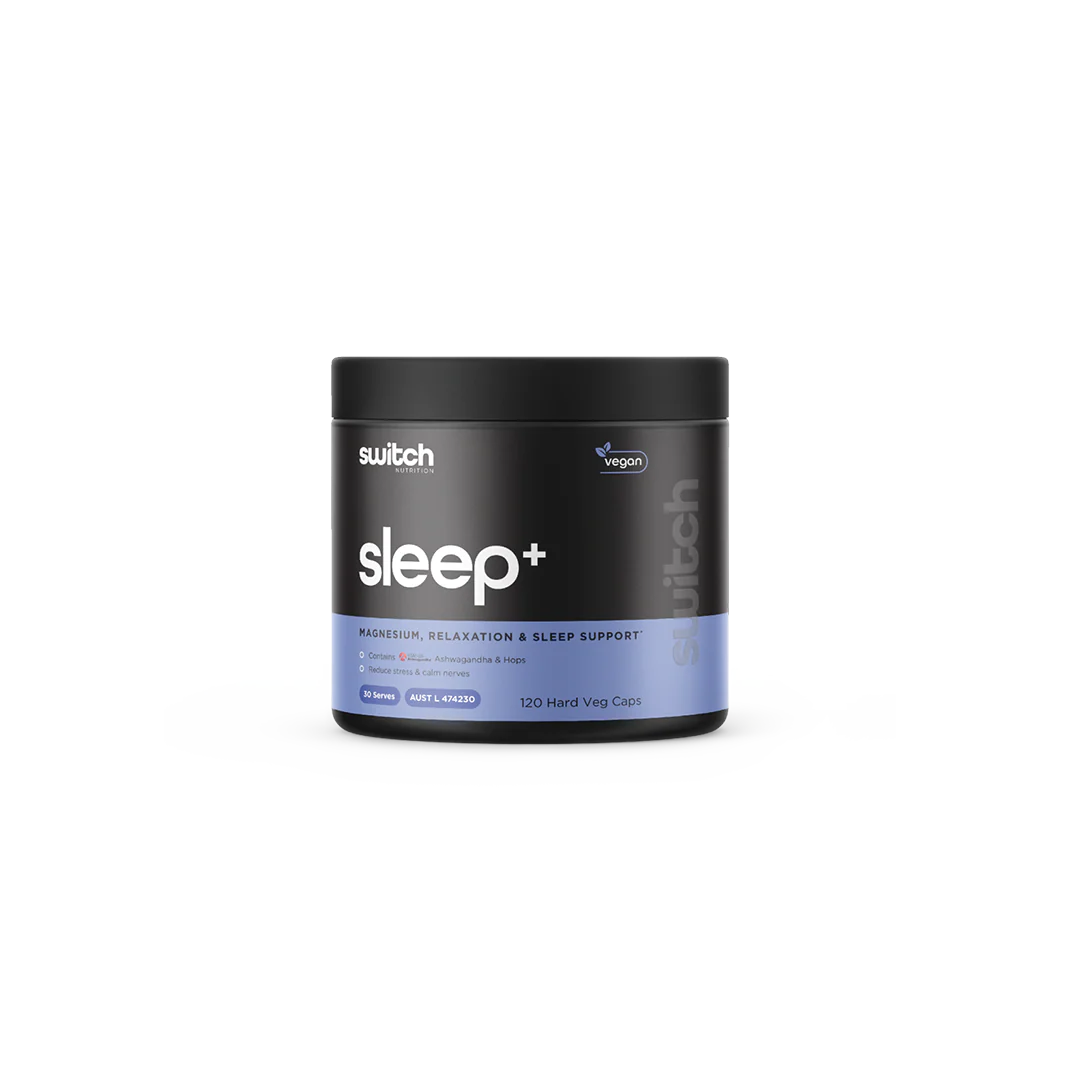
Sleep+ Capsules
A multi-action sleep stack: magnesium glycinate + KSM-66 ashwagandha + hops. Targets the cortisol awakening behind the 3am wake-up. Two capsules 30 minutes before bed.
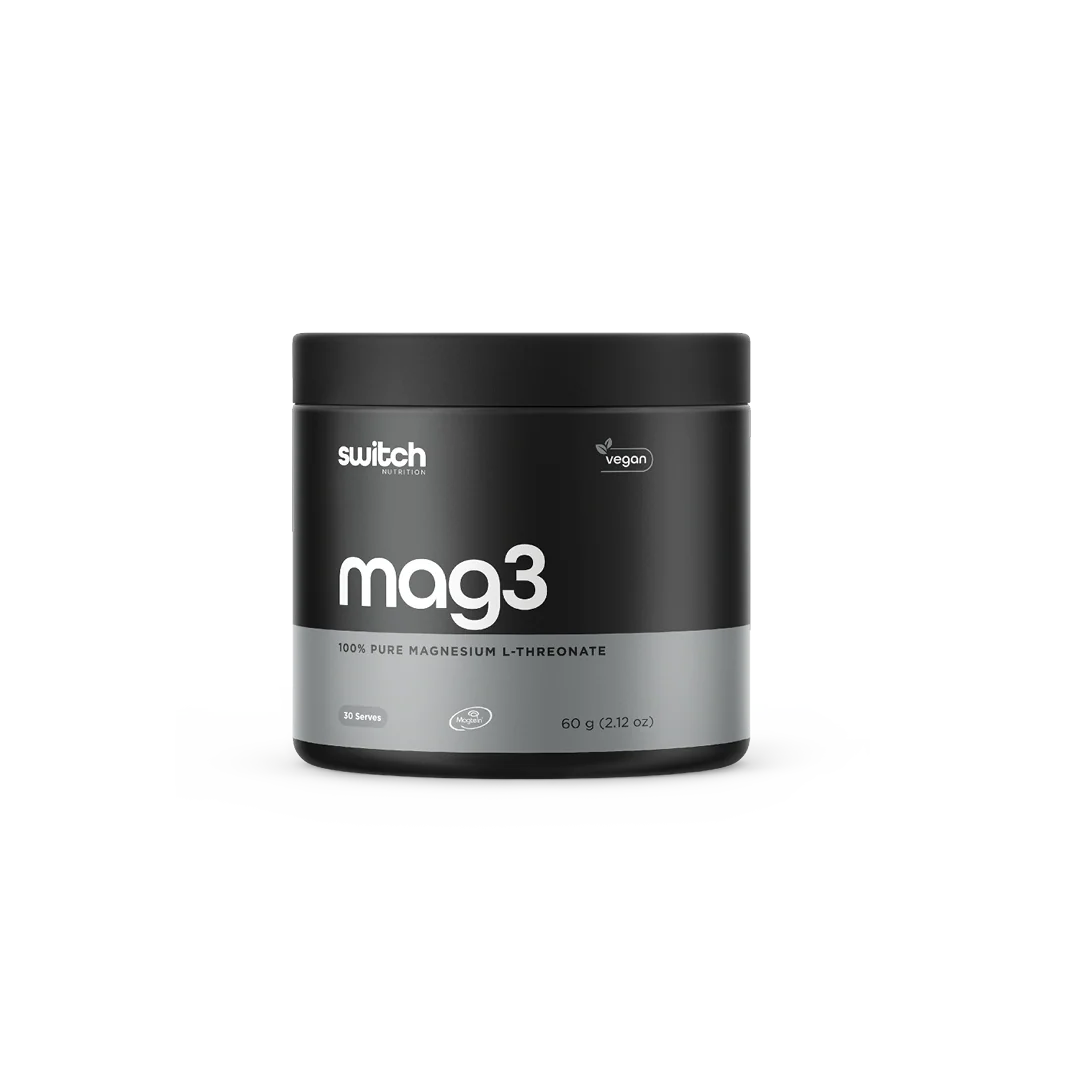
Mag3 (Magnesium L-Threonate)
Pure magnesium L-threonate — the form with the strongest research base for cognition and brain-fog support. Take in the evening.
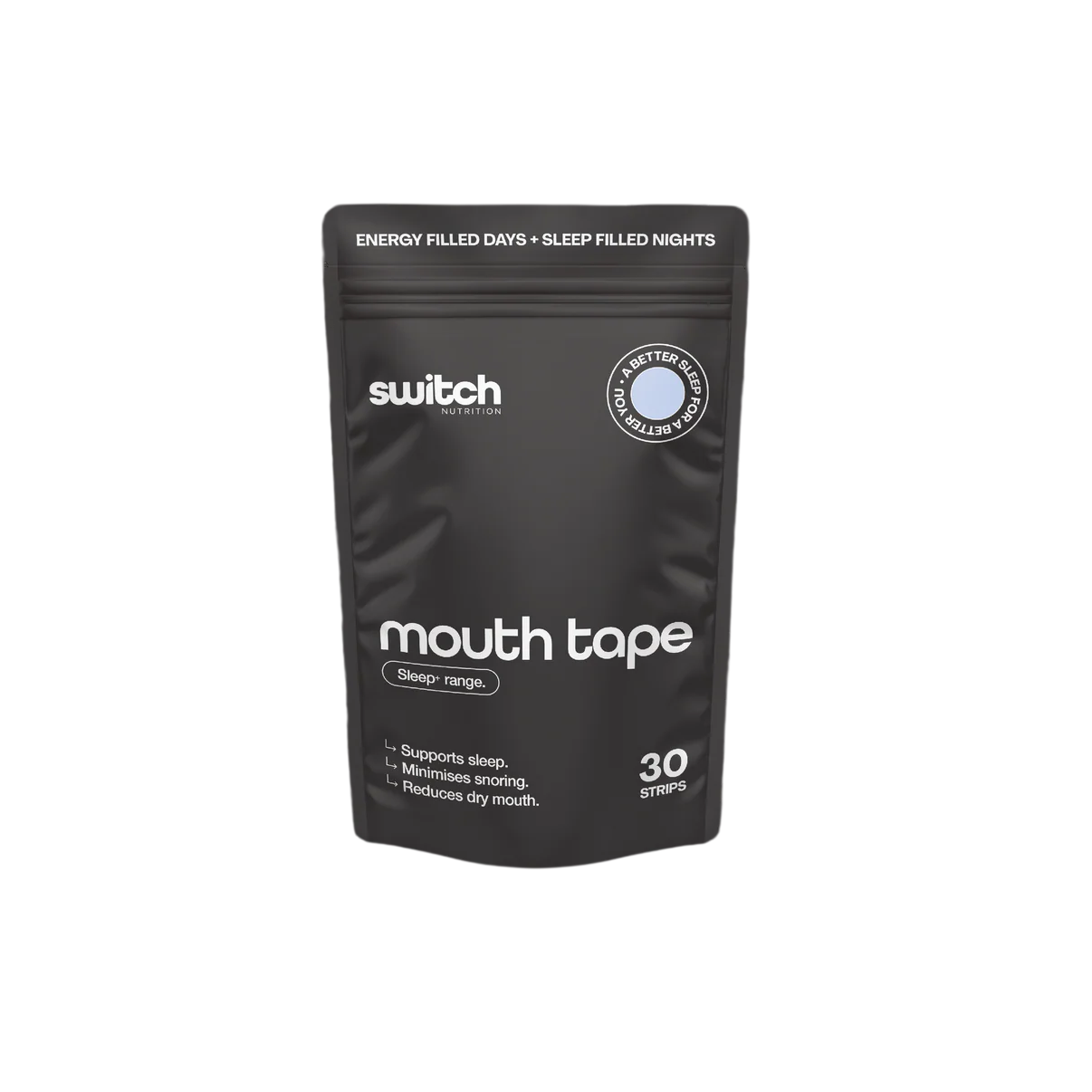
Sleep+ Mouth Tape
Single-use mouth tape designed to reduce mouth-breathing during sleep — a sleep-quality multiplier if your snore wakes you (or your partner) at 3am.
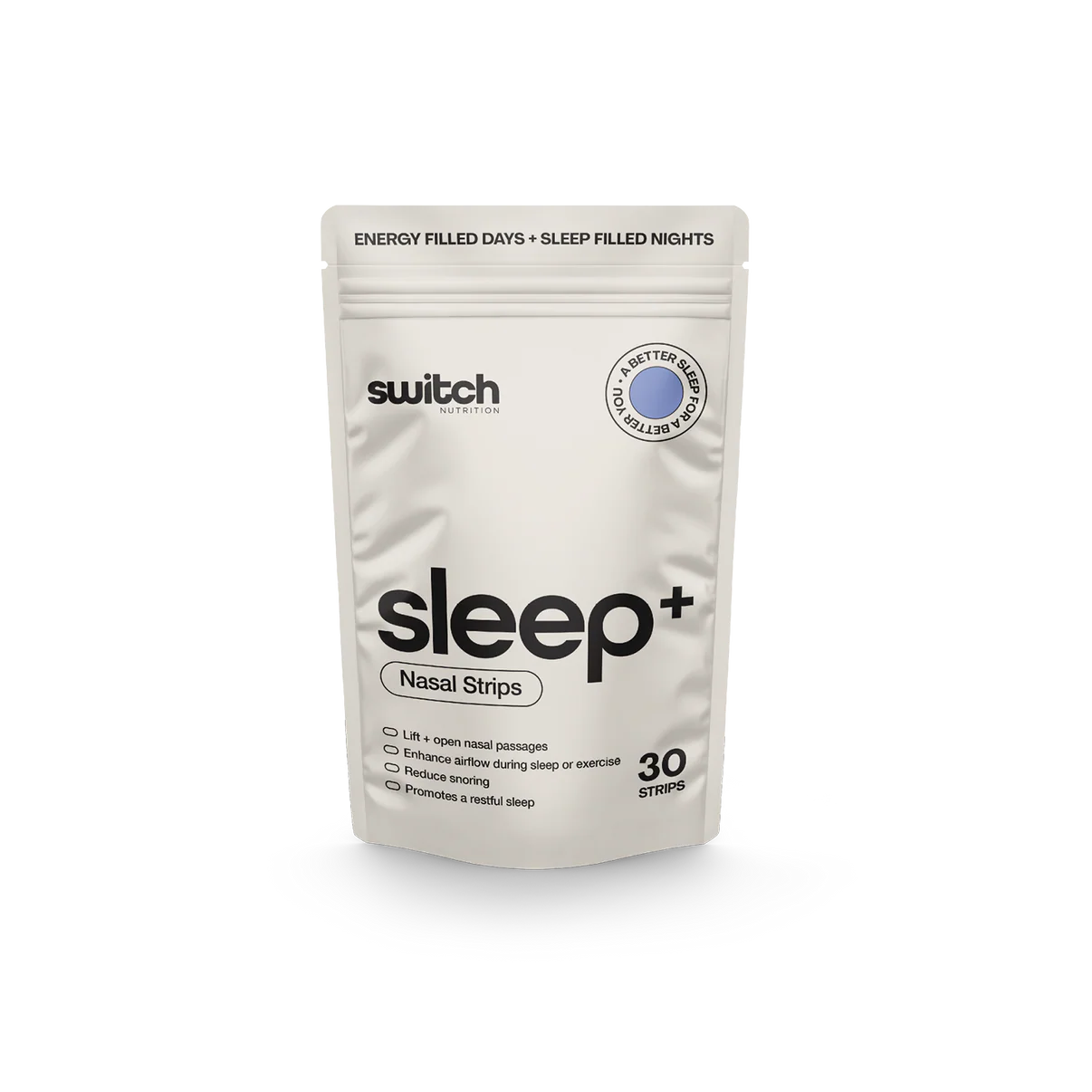
Sleep+ Nasal Strips
Single-use nasal strips that open the nasal passage for cleaner breathing through the night. Pair with the mouth tape for the full Switch sleep-airway protocol.
Protocol
- 30 min before bed — Sleep+ Capsules (2) with water. Magnesium glycinate + KSM-66 ashwagandha + hops together address magnesium, cortisol, and GABA pathways.
- Or alternate — Switch Mag3 (one scoop in water) for the cognition-leaning evening if brain fog is also a complaint.
- If mouth-breathing — apply Sleep+ Mouth Tape just before bed.
- If nasal congestion — Sleep+ Nasal Strips (single use, easy on/off).
What's not in the stack and why
- Melatonin — small evidence in midlife; doesn't address cortisol awakenings. Not the right tool.
- Standalone ashwagandha — useful for daytime stress and cortisol management; we cover it in adaptogens. Sleep+ Capsules already includes KSM-66 ashwagandha alongside the magnesium and hops.
- Sleeping pills (Z-drugs) — clinician-only, and the AMS Practitioner's Toolkit recommends behaviour-first approaches before pharmacotherapy.
The non-supplement levers — these matter more than any pill
- Cool room (18–20°C). Bigger than most people realise.
- No alcohol within 3 hours of bed. Single biggest sleep-quality multiplier in midlife.
- No screens 30 min before bed. Especially blue-shifted phone displays.
- Morning sunlight within an hour of waking. Anchors your cortisol curve to sunrise instead of 3am.
- Cut caffeine after 12pm. Caffeine has a 6-hour half-life — the 3pm coffee is still working in your system at 9pm.
When to see your GP
- Loud snoring + daytime fatigue + waking gasping — possible obstructive sleep apnoea. Don't tape your mouth; get a sleep study.
- Persistent insomnia >3 weeks despite hygiene basics — CBT-i (cognitive behavioural therapy for insomnia) has the strongest non-pharmacological evidence base.
- Depressive thoughts on waking — talk to your GP, not a supplement.
FAQ
How long until magnesium glycinate "works"?
Most people notice within 7–14 days at 300–400 mg/day. If nothing has shifted at 4 weeks, the form may not be bioavailable to you — try a different brand or move to L-threonate.
Can I take magnesium with MHT?
Yes — no known interaction. But always cross-check with your prescribing GP.
Does the mouth tape really work?
For habitual mouth-breathers, yes — the mechanism (forcing nasal breathing, which raises CO₂ and improves sleep depth) is real. For non-mouth-breathers, no benefit.
What about CBD or hemp gummies?
CBD evidence in midlife is mostly anecdotal; AU TGA regulation makes labelling inconsistent. We don't anchor on it.
References
- Mah & Pitre, 2021. Oral magnesium supplementation for insomnia in older adults: a systematic review and meta-analysis. BMC Complementary Medicine and Therapies. PMID 33865376.
- Mason et al., 2024. Magnesium bisglycinate supplementation in healthy adults reporting poor sleep: a randomized, placebo-controlled trial. Nature and Science of Sleep. PMC12412596.
- Arab et al., 2022. The role of magnesium in sleep health. PMID 35184264.
- Salve et al., 2019. Adaptogenic and anxiolytic effects of ashwagandha root extract in healthy adults. PMID 34553463.
- Australasian Menopause Society. Practitioner's Toolkit for the Management of the Menopause (2025). menopause.org.au.
Editorial note: not medical advice. If you have suspected sleep apnoea, depressive thoughts, or persistent insomnia despite the basics, see your GP. We use "supports / may help / is associated with" language by editorial discipline.